
Injection Molding Materials
Choosing the wrong injection molding material may causes 23% of product failures. Fortunately, First Mold has rich manufacturing experience in material application, so this percentage can be further reduced.
We provides a full range of injection molding materials for production. You pick the materials, we craft masterpieces.
We provides a full range of injection molding materials for production. You pick the materials, we craft masterpieces.
An NDA can be signed if needed before the quotation.
What Are Injection Molding Materials?
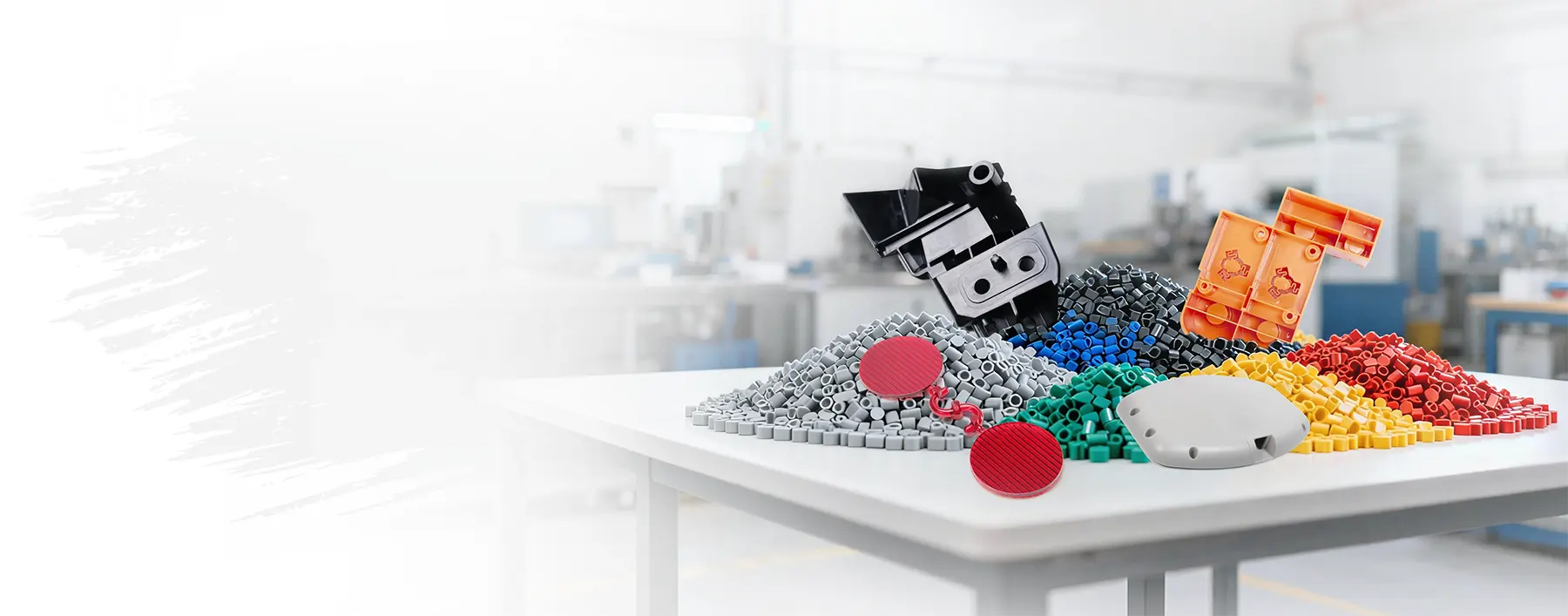
Plastic is a common material with polymer synthetic resin as its main component. They are plastic and fluid under certain temperatures and pressures, can be molded into specific shapes, and can maintain their shape under certain conditions. Most plastics can be injection molded, so injection molding materials are often referred to as those plastics that can be used in injection molding production.
Product designers need to rely on material properties to ensure design feasibility and performance. Injection molding engineers need to precisely regulate process parameters based on the thermal behavior of the material to optimize production. Mold designers need to design the mold structure with the material fluidity and shrinkage. Quality control personnel need to trace the root cause of the problem through material defect analysis.
If you are a beginner in injection molding, we recommend that you first click on “What is Injection Molding” to gain a comprehensive basic understanding of the process.
Product designers need to rely on material properties to ensure design feasibility and performance. Injection molding engineers need to precisely regulate process parameters based on the thermal behavior of the material to optimize production. Mold designers need to design the mold structure with the material fluidity and shrinkage. Quality control personnel need to trace the root cause of the problem through material defect analysis.
If you are a beginner in injection molding, we recommend that you first click on “What is Injection Molding” to gain a comprehensive basic understanding of the process.
How Many Types?
Injection Molding Materials Classification
Injection molding materials are usually divided into the following 5 categories according to the scientific classification system:
Future innovation directions include modified plastics that can be more customized for different performance needs. All injection molding materials are classified based on characteristics like durability, heat resistance, flexibility, and eco-friendly options.
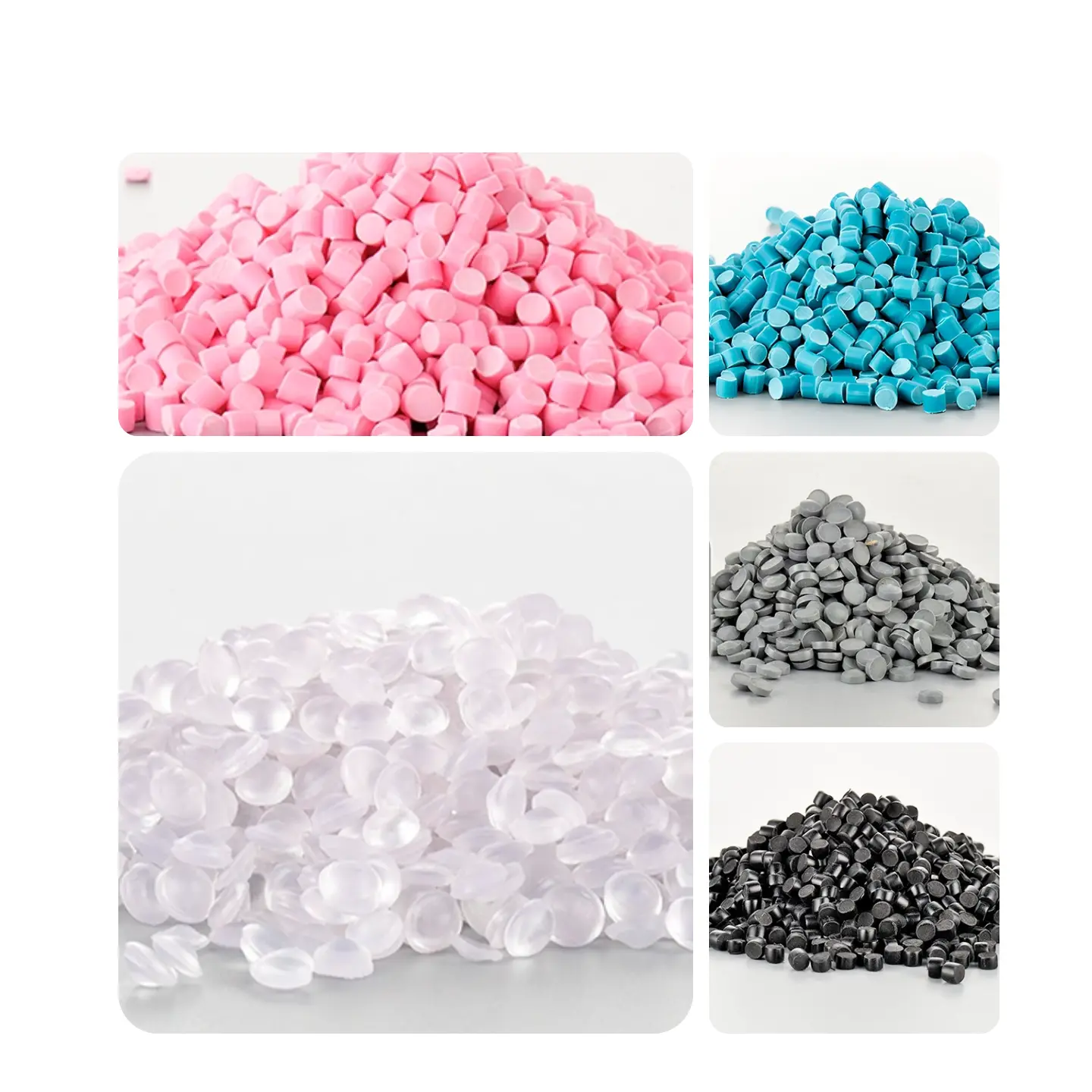
Injection Molding Materials Library
This knowledge base covers most commonly used plastics (including some modified plastics). You will be able to get a basic understanding of each plastic’s properties, applications, as well as its key advantages and disadvantages. If you are interested in a specific material, you can try clicking on the link under that material to access very detailed in-depth material knowledge.
ABS
Key Characteristics
Good impact resistance, rigid, machinable, easy to fabricate, cost-effective
Best For Prototypes
Consumer products, enclosures, automotive interior parts, toys, electronic housings
PEEK
Key Characteristics
High temperature resistance, chemical resistance, excellent mechanical properties, biocompatible
Best For Prototypes
Aerospace components, medical devices, oil and gas equipment, high-performance machinery
Nylon 6/6
Key Characteristics
High strength, wear resistance, good fatigue resistance, chemical resistance
Best For Prototypes
Gears, bearings, fasteners, structural components, automotive parts
PTFE (Teflon)
Key Characteristics
Extremely low friction, chemical resistance, high temperature resistance, non-stick properties
Best For Prototypes
Bearings, seals, gaskets, chemical processing equipment, cookware components
PC (Polycarbonate)
Key Characteristics
High impact resistance, optical clarity, heat resistance, dimensional stability
Best For Prototypes
Safety glasses, medical devices, automotive lighting, electronic enclosures, bulletproof glass
POM (Acetal)
Key Characteristics
Low friction, high stiffness, dimensional stability, good machinability
Best For Prototypes
Gears, bearings, valves, pump components, precision machined parts
How to Choose the Right Injection Molding Material for Your Product?
For most established products like water bottles or electronic device casings, material choices usually follow industry norms. For example, PP plastic works well for containers because it resists chemicals. ABS plastic, on the other hand, is good for consumer electronics casings. It balances strength and looks nicely. These material picks have stood the test of time, backed by decades of manufacturing experience.
But your product might not be one of those common items. Or maybe it’s an innovation based on an established product. In those cases, you’ll need to choose materials. There are several factors you’ll have to weigh:
Total Cost Analysis
Material cost per kg plus processing expenses and tooling impact.
Functional Performance
Mechanical, thermal, and electrical material properties required for product operation.
Environmental Resistance
Resistance to chemicals, UV, moisture, or extreme temperature conditions.
Manufacturing Feasibility
Injection molding process compatibility including flow behavior and cooling rates.
Aesthetic Requirements
Surface finish quality, color stability, and optical clarity characteristics.
Regulatory Compliance
Certifications for food-grade, medical, or flame-retardant plastics.
How to cut through the complexity? Start by answering serveral critical questions every designer asks:
How can I make my product look better?
To answer this question, you need to first clarify the cost structure of injection molding production and address the question of how material selection affects each cost element.
What are the main cost components of injection molding?
How Material Selection Impacts Project Costs
| Cost Component | Percentage Range | Details | Cost Type | Material Impact Mechanism | Optimization Strategy |
| Raw Material Costs | 40-60% | Includes base resin prices (subject to crude oil fluctuations) and costs of modifying additives (flame retardants, glass fibers, etc.). | Raw Material Cost | Significant price gaps exist between specialty plastics and commodity resins. | Apply the “fit-for-purpose” principle – avoid overspecification |
| Processing Costs | 20-35% | Includes equipment energy consumption, molding cycle time, and scrap losses. | Processing Cost | Material flowability directly affects cycle time – high MFI materials can reduce production time by 30%. | Prioritize high-flow grades for thin-wall designs |
| Mold Costs | 15-25% | Includes initial investment, maintenance costs, and life cycle expenses. | Mold Cost | Reinforced materials accelerate mold wear by 3x, shortening tool life. | Use hardened tool steel or surface coatings |
| Post-Processing Costs | 5-20% | Includes surface treatments, assembly difficulty, and testing and certification fees. | Post-Processing Cost | Material properties determine secondary operations. | Select functionally integrated materials |
Tips: Click on injection molding cost to learn more.
How much will my project really cost?
Once costs are confirmed as feasible, designers will likely turn their attention to a product’s visual appeal. Choosing the right injection molding material means considering how well it can achieve the desired look. This usually ties to the surface treatments applied after injection molding. Common plastic surface treatment options include:
| Processing Technology | Applicable Materials | Effect Characteristics | Cost Coefficient | Design Case Examples |
| In-Mold Decoration (IMD) | ABS, PC, PMMA | 3D graphics/text embedding, seamless touch control | ★★★☆ | Automotive center console panel |
| Painting | General plastics | High gloss/matte finish, gradient colors | ★★☆ | Appliance housing |
| NCVM Vacuum Plating | PC, PC/ABS | Metallic texture + signal transparency | ★★★☆ | Mobile phone antenna cover |
| Electroplating/Vacuum Plating | Electroplating-grade ABS | Mirror chrome/gold effect | ★★★★ | Bathroom faucet trim |
| Hydrographics/Heat Transfer | Parts with complex curvature | Wood grain/marble/camouflage imitation, seamless curved surface coverage | ★★☆ | Gun stock, helmet |
| Physical Vapor Deposition (PVD) | Engineering plastics (PA, POM) | Nanoscale hard coatings (AlCrN, TiN), high hardness | ★★★★ | Wear-resistant gears |
| Laser Engraving | Glass fiber reinforced plastics, dark plastics | Leather/grain patterns, geometric etching, anti-slip | ★☆☆ | Medical device labeling |
| Texture Etching | PP, ABS, TPE | Permanent black/white marking, micro-hole engraving | ★☆☆ | Tool handle |
| Plasma Treatment | Non-polar plastics (PP, PE, etc.) | Increased surface energy (up to 72mN/m), enhanced adhesion | ★★☆ | Headlight bonding prep |
| Surface Activation Pretreatment | Hard-to-bond plastics (PP, PTFE) | Generates polar groups (hydroxyl/carboxyl), chemical modification | ★☆☆ | PTFE bonding |
| Anti-fingerprint/Anti-fouling Coating | Touchscreen panels (PC, PMMA) | Hydrophobic angle >110°, wear-resistant (5000+ cycles) | ★★☆ | Medical touch screen |
| IMR Film Transfer | Flat/shallow curved parts | Scratch-resistant patterns (100k+ cycles), batch color change capability | ★★★☆ | Keyboard keys |
Logell Mold Factory’s skilled injection molding materials
We sincerely hope that you can have a deeper understanding of injection molding materials, as this will be greatly beneficial for your product design. In fact, many of our clients have varying degrees of understanding of plastic materials, and a small portion of them even specify particular material suppliers for us to purchase from. We highly encourage you to do this. At the same time, we can also provide various purchase verifications and material testing certifications.
PE Injection Molding
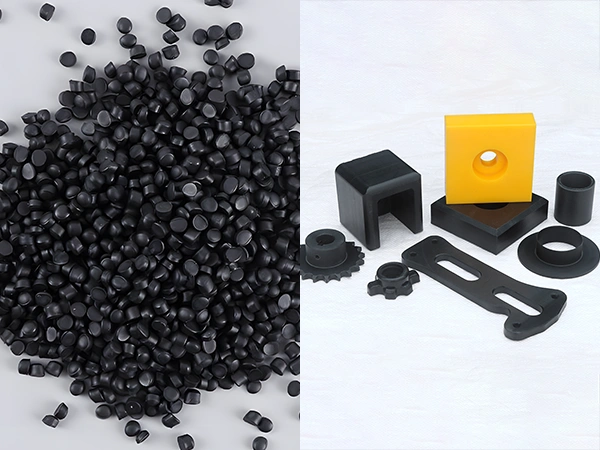
HDPE, LDPE and LLDPE.
PP Injection Molding
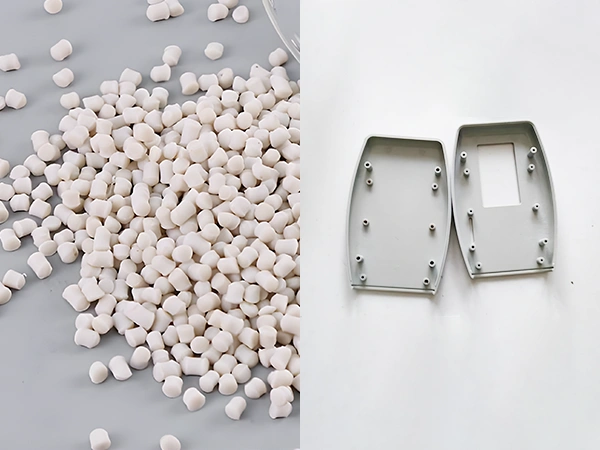
Both Homopolymer and Copolymer types.
PS Injection Molding
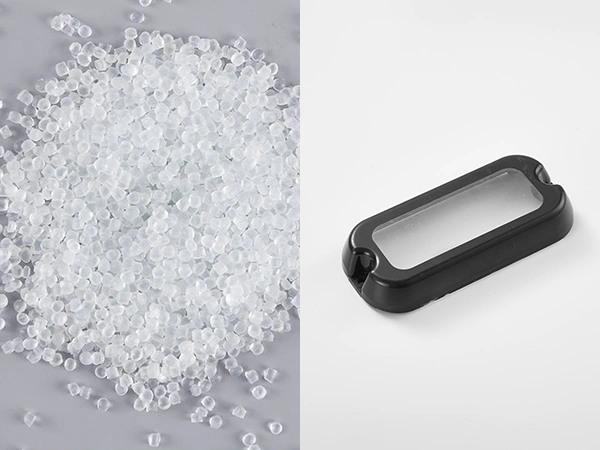
GPPS and HIPS.
PMMA Injection Molding
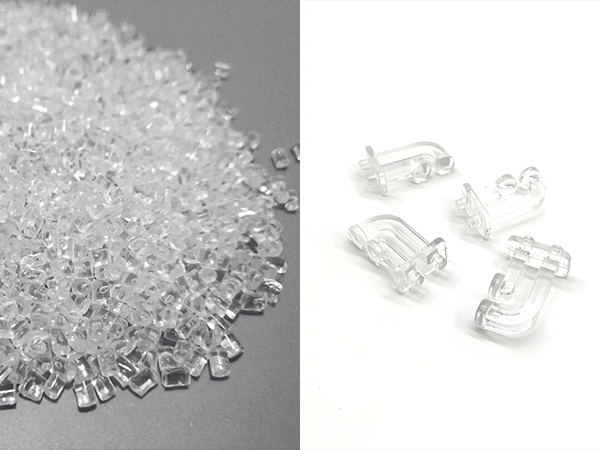
Clarity and resistance to UV light
PVC Injection Molding
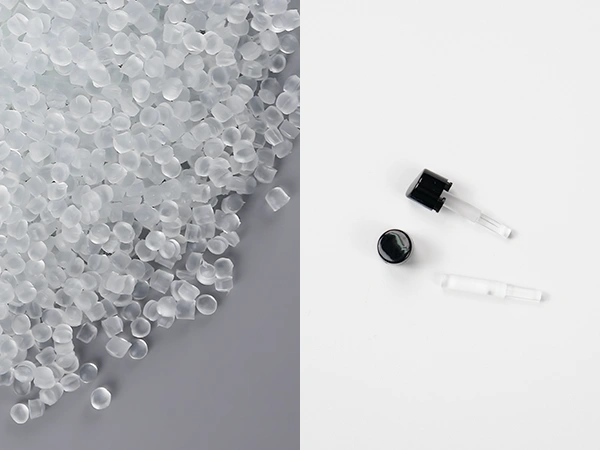
Rigid PVC and Flexible PVC.
ABS Injection Molding
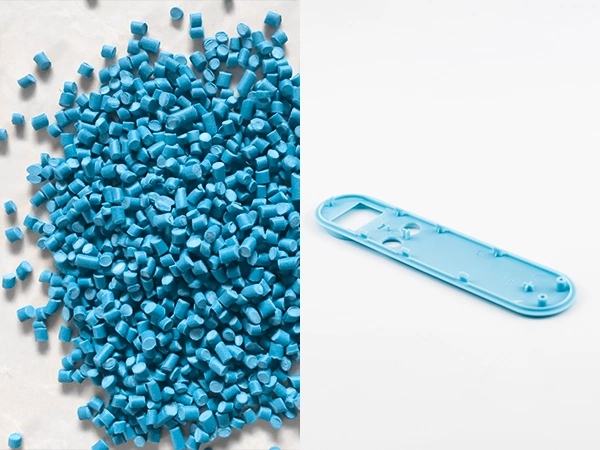
High-flow and flame-retardant grades.
PC Injection Molding
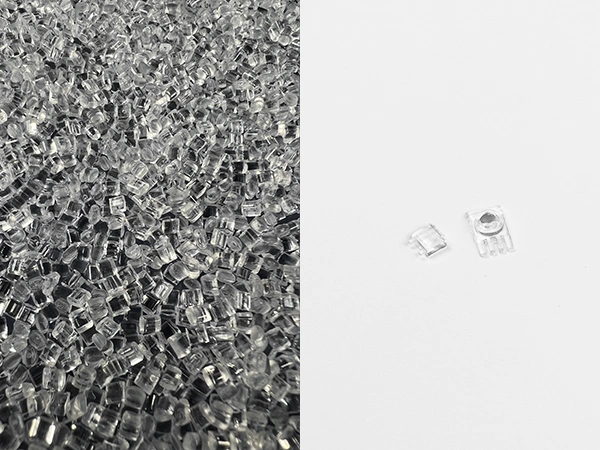
Standard, UV-stabilized, and flame-retardant varieties.
PA Injection Molding
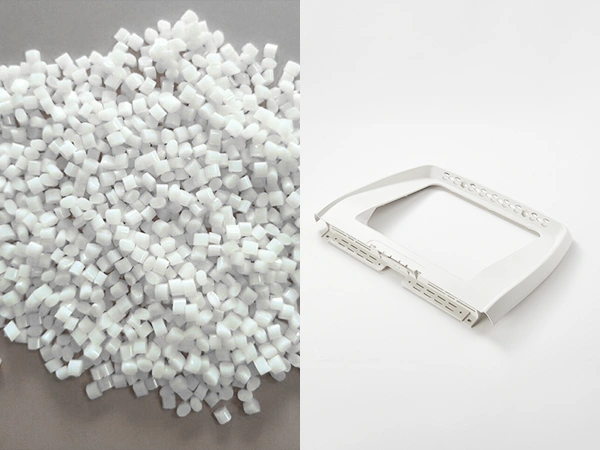
PA6, PA66, and specialty grades like PA12 for flexibility.
POM Injection Molding
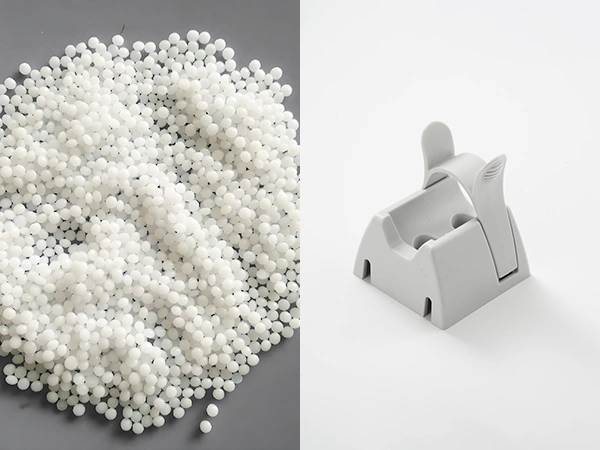
Copolymer and homopolymer grades.
PBT Injection Molding
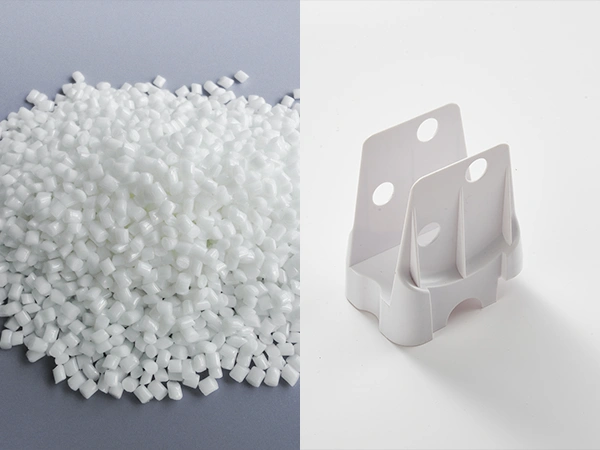
Electrical properties and chemical resistance
PEEK Injection Molding
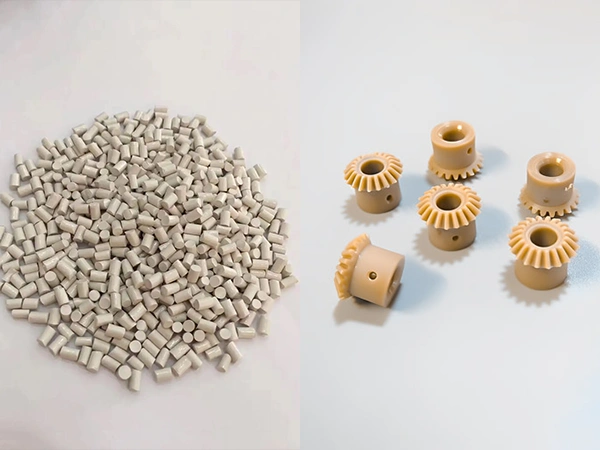
Standard, UV-stabilized, and flame-retardant varieties.
PEI Injection Molding
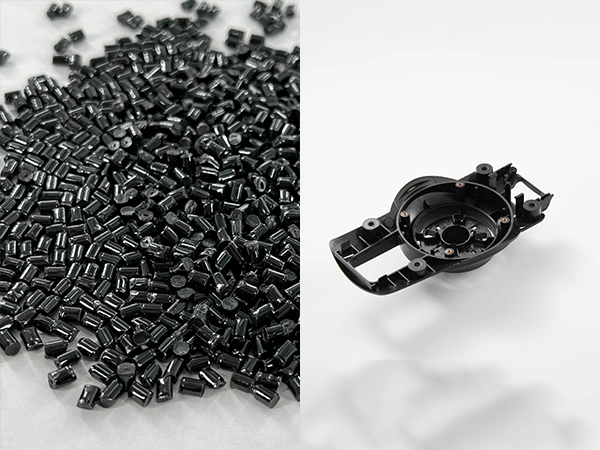
High heat resistance and strength.
PPS Injection Molding
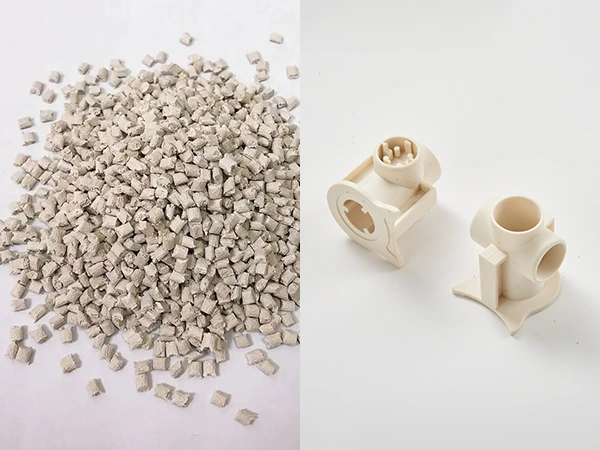
Available in virgin and reinforced grades for increased strength.
TPU Injection Molding
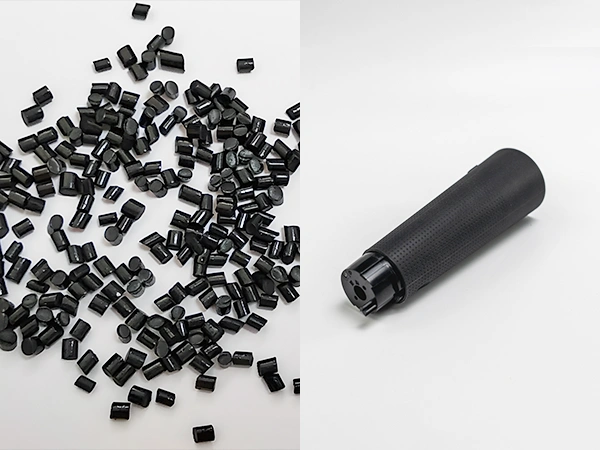
Ranging from soft and flexible to hard and rigid grades.
Modified Plastic Molding
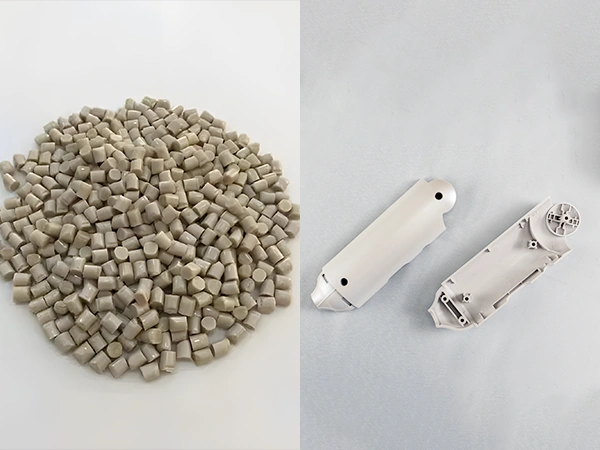
For increased mechanical strength and thermal resistance.
FAQ on Injection Molding Materials

What are the most cost-effective plastics for high-volume production?
Choosing low-cost plastics needs to match the application scenario. HDPE, PP, and PET are the most cost-effective in traditional fields. Starch-based plastics and PBS have the greatest potential in policy-driven biodegradable markets, especially when their costs are further reduced through blending or large-scale production.
How do I choose between engineering plastics like ABS, PC, and nylon?
If you need good all-around performance, easy processing, and relatively low cost—especially for casings, consumer goods, or car interior parts that require a nice finish and stable dimensions—ABS is usually a good choice.
If you need extremely high impact strength, transparency, or excellent heat distortion resistance—think safety gear, clear covers, or heat-resistant electronic casings—PC works better.
Nylon is the top pick when your application needs high wear resistance, strong mechanical strength, heat resistance, or good self-lubrication. This includes gears, bearings, moving parts, or heat-resistant components near engines.
The final choice between the three depends on a mix of factors. These include mechanical properties, heat performance, chemical resistance, cost, processing difficulty, and whether special modifications (like reinforcement or flame resistance) are needed.
If you need extremely high impact strength, transparency, or excellent heat distortion resistance—think safety gear, clear covers, or heat-resistant electronic casings—PC works better.
Nylon is the top pick when your application needs high wear resistance, strong mechanical strength, heat resistance, or good self-lubrication. This includes gears, bearings, moving parts, or heat-resistant components near engines.
The final choice between the three depends on a mix of factors. These include mechanical properties, heat performance, chemical resistance, cost, processing difficulty, and whether special modifications (like reinforcement or flame resistance) are needed.
What plastic materials maintain performance in extreme temperatures?
PBI is one type of plastic that maintains performance in extreme temperatures. It stays stable at high temperatures of 300-370°C for long periods. What’s more, it doesn’t break down at 538°C and has high strength.
PEI can work at 170°C for a long time and handle short bursts of 510°C. It also has important properties like resistance to water damage and radiation.
PEEK keeps its mechanical properties stable at 260°C and can handle temperatures over 300°C for short times. It works well in high-temperature fatigue environments.
PI handles a wide temperature range, from -240°C to 290°C, and can even take 480°C for short periods.
PTFE stays chemically inert with low friction between -196°C and 260°C. It remains stable at 280°C for short times too.
UHMWPE keeps its impact resistance even in liquid nitrogen at -269°C. TPU stays elastic at its brittle point of -60°C and retains over 90% of its elasticity at -40°C.
All these materials balance performance in extreme temperatures through molecular designs, such as rigid aromatic ring chains and fluorine atom shielding.
PEI can work at 170°C for a long time and handle short bursts of 510°C. It also has important properties like resistance to water damage and radiation.
PEEK keeps its mechanical properties stable at 260°C and can handle temperatures over 300°C for short times. It works well in high-temperature fatigue environments.
PI handles a wide temperature range, from -240°C to 290°C, and can even take 480°C for short periods.
PTFE stays chemically inert with low friction between -196°C and 260°C. It remains stable at 280°C for short times too.
UHMWPE keeps its impact resistance even in liquid nitrogen at -269°C. TPU stays elastic at its brittle point of -60°C and retains over 90% of its elasticity at -40°C.
All these materials balance performance in extreme temperatures through molecular designs, such as rigid aromatic ring chains and fluorine atom shielding.
Can I achieve both aesthetics and durability in outdoor products?
In outdoor product design, injection-molded materials can achieve both aesthetics and durability. For example, you can choose weather-resistant resins, like ASA or PC/ABS with UV-resistant additives, to ensure colors stay bright and don’t fade. At the same time, you can ask injection molding factories to use two-color injection molding or textured mold technology to create complex surface effects. This lets the product keep its inherent impact resistance, corrosion resistance, and stability across a wide temperature range (-40°C to 120°C). It’s not too hard for outdoor products to maintain both functional and visual quality over time, even in long-term exposure to sun and rain.
How does material selection impact mold design complexity?
Material properties like flowability, shrinkage rate and thermal stability directly affect how complex a mold’s structure needs to be. High-viscosity materials, such as PC, require higher injection pressure and precise venting designs. Low-shrinkage materials, like PPS, allow for smaller draft angles but demand mold steel that resists wear. Glass fiber-reinforced materials force molds to use cemented carbide. They also need optimized runners to prevent uneven fiber orientation. Crystalline materials, such as PEEK, have strict temperature control needs. This makes designing the mold’s cooling system much harder. Choosing a material is essentially a balance between mold cost and molding precision.
What are the tradeoffs when using reinforced plastics?
When designing products, you must balance improved mechanical performance with processing challenges when choosing reinforced plastics. A high glass fiber content in reinforced plastics significantly boosts strength and heat resistance, but it also speeds up mold wear and may cause fiber floating on the surface. The reduced flowability of the material requires higher injection pressure and limits thin-wall designs. Anisotropic shrinkage can lead to dimensional deviations, which need to be compensated for through structural optimization. Higher raw material costs and greater difficulty in recycling also need to be included in the full life cycle assessment. In the end, the specific ratio should be determined based on the product’s function, production scale, and cost structure.
Which plastics allow eco-friendly disposal or recycling?
Almost all common plastics can be disposed of in an eco-friendly way through physical recycling, chemical recycling or biodegradation. PET bottles and rigid HDPE/PP plastics are sorted, cleaned, melted and regranulated for use in textiles and packaging. PE, PP and PS can be converted into plastic oil through catalytic cracking or pyrolysis, which is then used to produce primary-grade PE and PP. PU foam recovers polyols through chemical depolymerization, which are reused in mattresses and building materials. In general, single-material designs can improve recycling efficiency.
It’s worth noting that if recycling is not done scientifically, recycled plastics may pose health risks. Microplastics from mechanical recycling can enter the human body through the food chain. Improper temperature control during pyrolysis recycling can release carcinogens like dioxins. When recycled plastics are used in food packaging, residual pollutants (such as heavy metals and plasticizers) may migrate into food, which is why the EU’s EFSA strictly restricts the use of rPET in food contact applications.
It’s worth noting that if recycling is not done scientifically, recycled plastics may pose health risks. Microplastics from mechanical recycling can enter the human body through the food chain. Improper temperature control during pyrolysis recycling can release carcinogens like dioxins. When recycled plastics are used in food packaging, residual pollutants (such as heavy metals and plasticizers) may migrate into food, which is why the EU’s EFSA strictly restricts the use of rPET in food contact applications.
What testing validates material performance before full production?
Before full production, you can conduct mechanical performance tests, thermal performance verification, weather resistance evaluation and chemical compatibility experiments.
Mechanical performance tests include ISO 527 for tensile strength and ISO 180 for impact toughness.
Thermal performance verification covers UL 94 for flame retardancy rating and IEC 60068 for temperature cycle testing.
Weather resistance evaluation includes ISO 4892 for UV aging and ISO 4611 for salt spray corrosion.
Chemical compatibility experiments refer to ISO 175 for reagent resistance testing.
Depending on your needs, you can also verify the injection molding process window (melt flow rate MFR/ISO 1133) and test dimensional stability (ISO 294-4 for shrinkage rate). For medical devices or food contact applications, biocompatibility testing (ISO 10993) and migration analysis (EU 10/2011) are also required.
Mechanical performance tests include ISO 527 for tensile strength and ISO 180 for impact toughness.
Thermal performance verification covers UL 94 for flame retardancy rating and IEC 60068 for temperature cycle testing.
Weather resistance evaluation includes ISO 4892 for UV aging and ISO 4611 for salt spray corrosion.
Chemical compatibility experiments refer to ISO 175 for reagent resistance testing.
Depending on your needs, you can also verify the injection molding process window (melt flow rate MFR/ISO 1133) and test dimensional stability (ISO 294-4 for shrinkage rate). For medical devices or food contact applications, biocompatibility testing (ISO 10993) and migration analysis (EU 10/2011) are also required.
Why do some materials require drying before processing?
Drying plastic materials before processing is mainly to get rid of moisture interference. Hygroscopic materials, like nylon, PC and PET, contain moisture. When processed at high temperatures, this moisture turns to vapor. It can cause injection defects such as silver streaks and bubbles. At the same time, this process triggers polymer hydrolysis. It breaks the molecular chains. This significantly reduces the material’s impact strength and dimensional stability. Drying the material controls moisture content (usually below 0.02%). This ensures the melt flows evenly and keeps its molecular structure intact. It also prevents the injection-molded products from losing mechanical performance or surface smoothness.
How can First Mold assist with complex material decisions?
Logell Mold provides customers with scientific injection material decision support by integrating material property databases and process simulation analysis.
First, we screen candidate materials based on product functional requirements, such as temperature resistance and impact resistance. Then we use mold runner simulations to predict how material flowability and shrinkage will affect molding quality.
Second, we collect temperature and pressure data during the injection process through a real-time process monitoring system. We also optimize gate designs to avoid silver streak defects in injection molding. In addition, we set up independent drying pipelines for highly hygroscopic materials like PA and PC. This ensures moisture content is ≤0.005%. We also use a closed-loop feeding system to prevent cross-contamination.
Finally, we rely on a full-life-cycle traceability mechanism to ensure material compliance, meeting strict certification requirements across various industries.
First, we screen candidate materials based on product functional requirements, such as temperature resistance and impact resistance. Then we use mold runner simulations to predict how material flowability and shrinkage will affect molding quality.
Second, we collect temperature and pressure data during the injection process through a real-time process monitoring system. We also optimize gate designs to avoid silver streak defects in injection molding. In addition, we set up independent drying pipelines for highly hygroscopic materials like PA and PC. This ensures moisture content is ≤0.005%. We also use a closed-loop feeding system to prevent cross-contamination.
Finally, we rely on a full-life-cycle traceability mechanism to ensure material compliance, meeting strict certification requirements across various industries.