
New Product Development: The 6‑Step Guide for Designers & Engineers
In today’s fast‑paced market, new product development (NPD) isn’t just a competitive advantage—it’s a necessity. Every industry evolves with technology, and customers demand better, smarter, more sustainable solutions. For product designers and structural engineers, building successful products means balancing structural integrity, usability, aesthetics, and real‑world performance.
This guide breaks down a clear, actionable 6‑step NPD workflow to help you plan, build, test, and launch products that stand out.
What Is New Product Development (NPD)?
New product development is the end‑to‑end process of turning an idea into a finished, market‑ready product. It combines product development (market research, concepting) and product engineering (designing, prototyping, testing) to create solutions that are safe, dependable, and customer‑focused.
- Product Development: Focuses on market needs, ideation, and strategy.
- Product Engineering: Ensures designs meet performance, safety, and manufacturing standards.
Together, they bridge creativity and practicality.
The 6‑Step New Product Development Process
1. Define the Problem & Validate Market Need
The foundation of any successful product is solving a real problem.
- Identify customer pain points, usability flaws, or unmet needs.
- Research industry trends and assess technical and commercial feasibility.
- Analyze competitors to find gaps in existing solutions.
Key actions:
- Conduct market research and competitor analysis.
- Review technical constraints, materials, and structural limits.
- Confirm your idea is realistic with current technology.
2. Generate & Validate Solutions
Turn problems into actionable concepts.
- Brainstorm with your team and explore multiple design directions.
- Create wireframes, mockups, and rough concept sketches.
- Build early prototypes using CAD software and 3D printing.
Validate ideas by:
- Testing prototype usability with real users.
- Reviewing engineering feasibility with designers and engineers.
- Iterating quickly based on feedback.
3. Plan & Prioritize Development
Good planning prevents delays, budget overruns, and misalignment.
- Allocate resources: team, materials, tools, and budget.
- Assign clear roles and responsibilities.
- Break work into small, manageable tasks.
Prioritize effectively using:
- Task backlogs ranked by importance and urgency.
- Product roadmaps with clear milestones.
- MoSCoW method (Must‑have, Should‑have, Could‑have, Won’t‑have).
- Agile frameworks like Scrum or Kanban.
4. Build & Test the Engineering Product
This is where ideas become physical, functional products.
- Use Design for Manufacturability (DFM) to lower costs and simplify production.
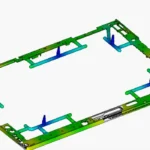
- Create detailed CAD models and run CAE simulations.
- Choose durable, fit‑for‑purpose materials.
Comprehensive testing includes:
- Performance testing under real‑world conditions.
- Security testing for data‑sensitive products.
- Usability testing to improve user experience.
- Quality assurance to eliminate defects.
5. Launch & Market the Product
Prepare your product for the market with a clear strategy.
- Define your value proposition and target audience.
- Choose communication channels: social, email, webinars, demos.
- Launch virtual or in‑person events to showcase features.
After launch:
- Collect early user feedback via surveys and reviews.
- Track KPIs to measure launch effectiveness.
- Adjust messaging based on real‑world response.
6. Evaluate & Continuously Improve
NPD doesn’t end at launch.
- Measure success with KPIs: customer satisfaction, retention, lifetime value.
- Analyze user feedback to find improvement opportunities.
- Release updates, refinements, and new features over time.
This cycle keeps your product competitive and aligned with evolving user needs.
Key Benefits of Structured New Product Development
- Lower risk: Test and validate early to avoid costly mistakes.
- Faster time‑to‑market: Clear steps reduce rework and delays.
- Stronger innovation: Encourage creative problem‑solving in a structured way.
- Better alignment: Bridge design and engineering for smoother collaboration.
- Higher customer satisfaction: Build products people actually want and need.
Future Trends in Product Development
- Sustainable & eco‑friendly design: Recyclable materials, energy‑efficient production.
- 3D printing & additive manufacturing: Faster prototyping and complex geometries.
- Robotic Process Automation (RPA): Streamline repetitive manufacturing tasks.
- Digital twins: Virtual replicas for deep simulation and performance analysis.
- AI & machine learning: Smarter design, predictive maintenance, and quality control.
Final Thoughts
Successful new product development starts with understanding real user needs and follows a structured, repeatable process. By combining creative design with strong engineering, you can build products that are structurally sound, sustainable, practical, and visually appealing—all while driving growth for your business.
Whether you’re developing hardware, tools, or consumer goods, these six steps will help you go from concept to successful launch with confidence.
Need a handy checklist?
I can make a printable 6‑step NPD checklist you can use for every project. Just say the word!